
What If We Could Talk to Animals?
Quick Answer: If humans could truly communicate with animals, our understanding of life on Earth would change forever. We could deepen our relationships with pets, unlock the mysteries of wildlife, and transform science, conservation, farming, and the way we share the planet.

The Premise
Imagine waking up tomorrow to the announcement of a scientific breakthrough unlike anything in history. Researchers have developed a technology that allows humans to understand and communicate with animals. Dogs, cats, whales, elephants, birds, dolphins, and countless other species can suddenly share thoughts, needs, memories, and experiences in ways we can finally comprehend.
This is not a world where animals suddenly become human. They continue to think, behave, and experience life through their own instincts and senses. Instead, humanity gains the ability to translate their unique forms of communication into meaningful conversations, allowing both species to understand one another as never before.
At first, the change seems almost magical. Pet owners finally learn what their companions are thinking. Scientists gain direct insight into wildlife. Conservationists discover how animals experience their environments. Yet as millions of new voices join the global conversation, humanity may also be forced to confront difficult questions about intelligence, ethics, farming, and our relationship with every living creature that shares our planet.
The Science and Speculation
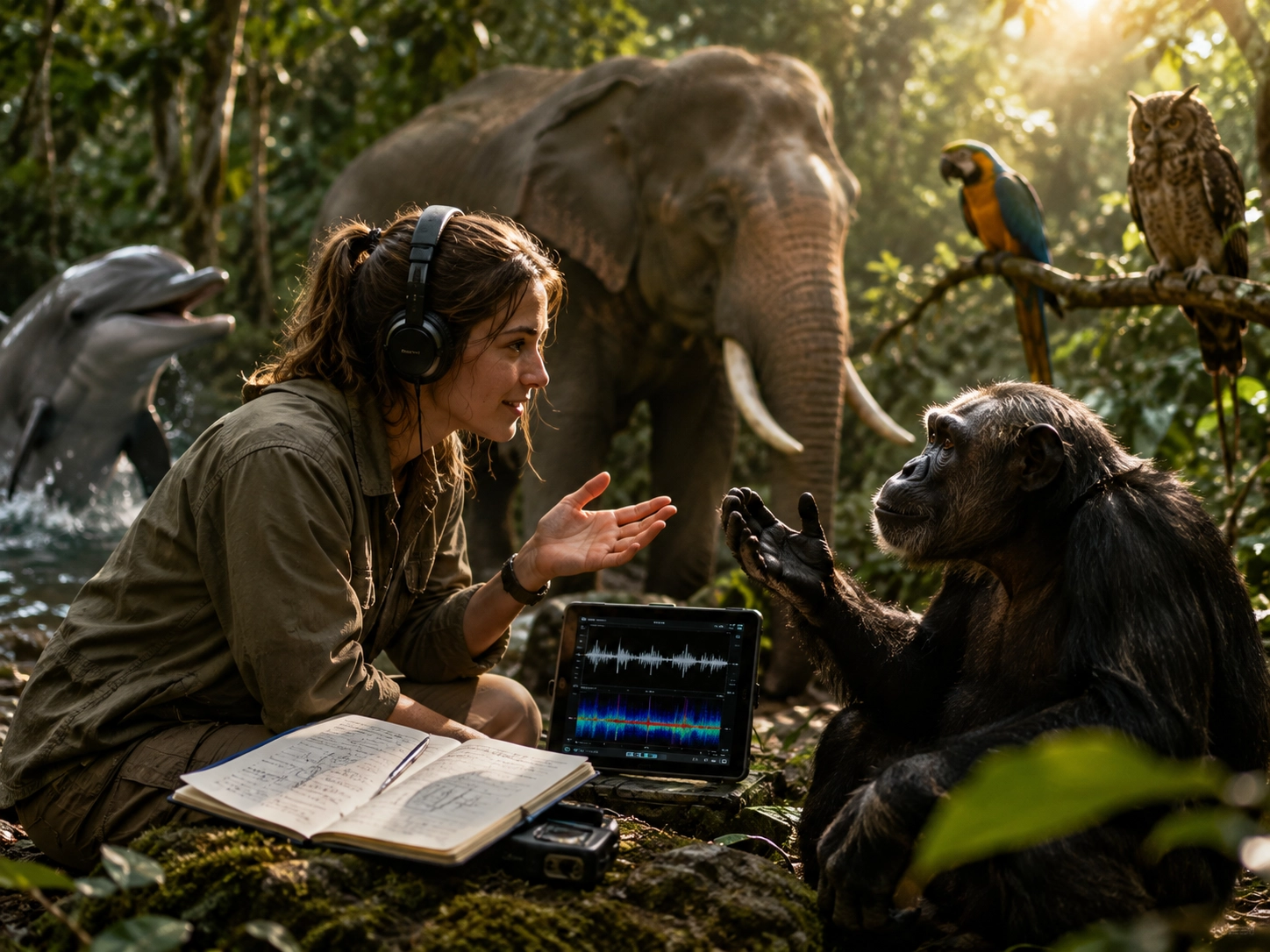
Scientists have discovered that many animals communicate in remarkably sophisticated ways. Birds use complex songs to attract mates and defend territory. Dolphins identify one another with unique signature whistles. Elephants communicate through low-frequency sounds that travel for kilometers, while bees perform intricate "waggle dances" to tell others where food can be found.
Researchers continue to study animal cognition using artificial intelligence, machine learning, and advanced acoustic analysis. These technologies are helping scientists recognize patterns in whale songs, dolphin whistles, primate calls, and other forms of communication that were once impossible to interpret. Although we cannot yet hold true conversations with animals, each discovery suggests their communication is often richer than previously believed.
Even if technology eventually translated animal signals into human language, communication would remain a two-way challenge. Different species experience the world through senses, instincts, and priorities that can differ dramatically from our own. Understanding their words might prove easier than understanding their perspective.
Whether such a breakthrough would deepen humanity's respect for animals or fundamentally change how we treat them remains one of the most fascinating questions we can imagine.
Possible Consequences
- Pets Become True Companions: Dogs, cats, horses, and other companion animals could finally tell us what they need, how they feel, and even share memories of their lives. Relationships between people and their pets might become deeper than ever before.
- Wildlife Reveals Hidden Worlds: Scientists could ask migrating birds about their journeys, whales about the oceans they travel, or elephants about changing habitats. Decades of observation might be replaced by direct conversations.
- Conservation Takes a Giant Leap: Endangered animals could help researchers identify threats such as pollution, habitat loss, poaching, and climate change, allowing conservation efforts to become far more effective.
- Farming Faces Difficult Questions: If livestock could clearly express fear, comfort, or suffering, society might rethink food production, animal welfare, and the ethics of raising animals for human consumption.
- Veterinary Medicine Improves: Animals could explain where they hurt, describe unusual symptoms, and help veterinarians diagnose illnesses far more quickly and accurately.
- New Friendships Emerge: Zoos, aquariums, wildlife sanctuaries, and rehabilitation centers might become places of genuine conversation, allowing people to understand the personalities and experiences of countless species.
- Humanity Gains a New Perspective: Animals experience the world through senses humans often lack, including echolocation, ultraviolet vision, magnetic navigation, and extraordinary hearing or smell. Their descriptions of the world could completely reshape our understanding of nature.
Surprising Facts
- Dolphins develop unique signature whistles that function much like individual names, allowing them to recognize one another over long distances.
- Elephants communicate using low-frequency sounds that can travel for several kilometers through both the air and the ground.
- Honeybees perform an intricate "waggle dance" to tell other bees the direction and distance of food sources.
- Artificial intelligence is already helping scientists analyze whale songs, bird calls, and other animal vocalizations in hopes of discovering previously unknown communication patterns.
In Pop Culture
The dream of talking with animals has appeared throughout mythology, folklore, literature, film, and television. Stories such as Doctor Dolittle, Charlotte's Web, and countless animated adventures imagine animals speaking with human voices, sharing advice, revealing secrets, and forming friendships across species.
These stories often present animal communication as something joyful and magical. Yet they also raise deeper questions. If animals could explain their thoughts clearly, humans might discover that they possess complex emotions, memories, relationships, and cultures that have gone largely unnoticed. Fiction frequently suggests that the greatest surprise would not be that animals can speak, but that they may already understand far more than we realize.
Expert Take
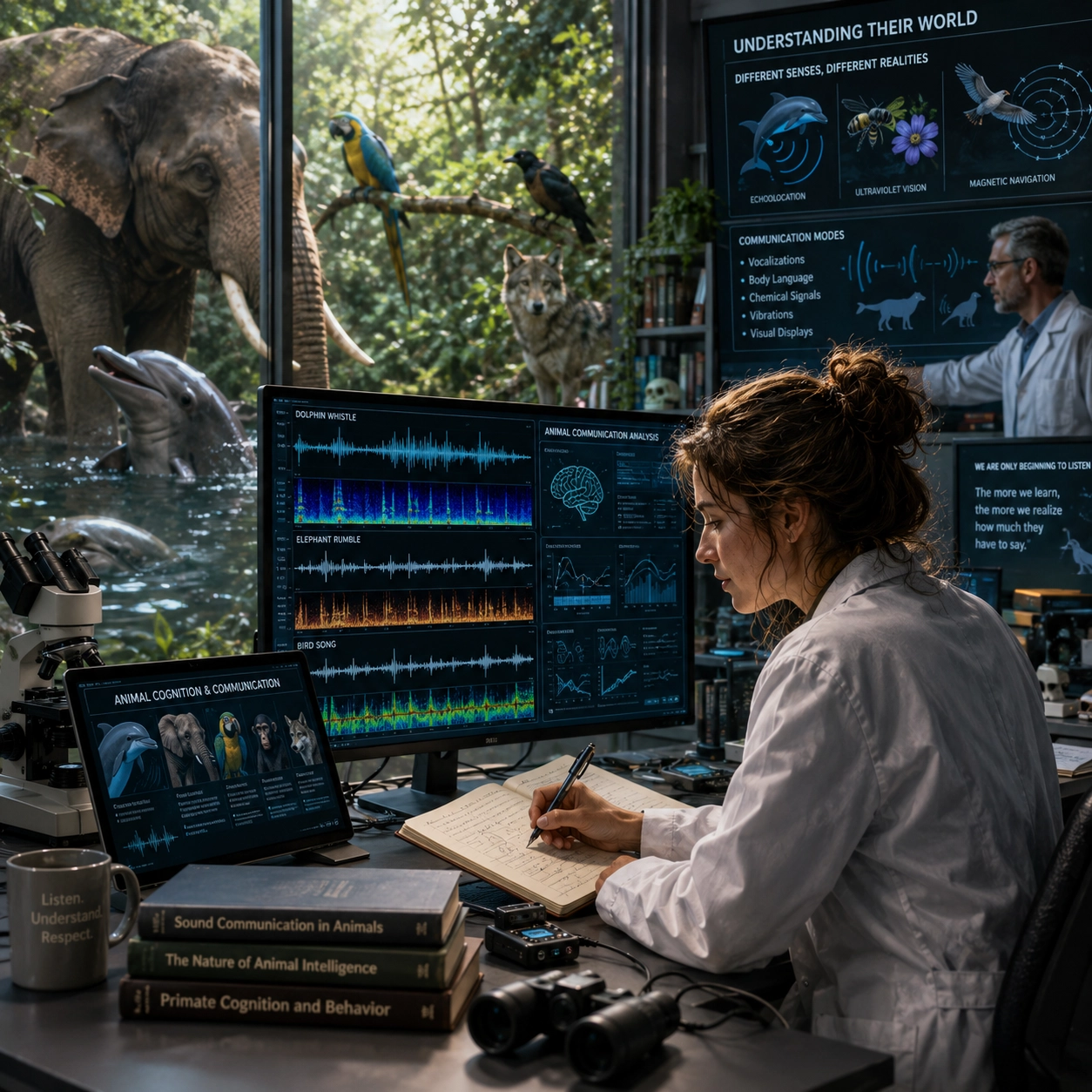
Scientists who study animal behavior generally avoid assuming that animal signals work exactly like human language. A whale song, bird call, scent mark, gesture, or change in posture may communicate information, but its meaning is shaped by the species' environment, social structure, and senses.
Researchers therefore combine careful observation with recordings, experiments, acoustic analysis, and artificial intelligence to search for repeated patterns. Some animals appear capable of recognizing individuals, warning others of specific dangers, coordinating group behavior, and learning symbolic systems. These discoveries suggest that communication across species may be more complex than previously imagined.
Experts also caution that translation would not automatically create perfect understanding. Human language is filled with abstraction, metaphor, and cultural assumptions, while many animals may communicate primarily about immediate needs, relationships, territory, danger, or food. The greatest breakthrough may not be teaching animals to speak like humans, but learning how to listen on their terms.
Skygaze Twist
What if the greatest discovery wasn't that animals could talk, but that they had been communicating with us all along? A dog's posture, an elephant's rumble, a whale's song, or a bird's warning call may already carry meaning that humans have simply failed to understand. Perhaps the silence between species has never been empty. Perhaps we have only been listening for words that sound like our own.
What About You?
If you could have one honest conversation with any animal, which species would you choose, and what would you ask first? Would you speak with a beloved pet, question a whale about the ocean, or ask a migrating bird how it finds its way across the world? Would understanding animals bring humanity closer to nature, or force us to reconsider how we treat it? Think it over, and continue exploring more bold possibilities here on Skygaze.