
The 27 Club - A Strange Pattern in Music History
The "27 Club" is the label given to a cluster of famous musicians and artists who died at the age of 27. The pattern has sparked decades of speculation: coincidence, lifestyle risk, cultural mythmaking, or something stranger?
Notable Members
- Robert Johnson (1938) - Blues pioneer
- Nat Jaffe (1945) - Jazz pianist
- Jesse Belvin (1960) - R and B singer
- Rudy Lewis (1964) - Lead singer of the Drifters
- Malcolm Hale (1968) - Spanky and Our Gang guitarist
- Dickie Pride (1969) - British rock singer
- Brian Jones (1969) - Rolling Stones founder
- Alan Wilson (1970) - Canned Heat singer and guitarist
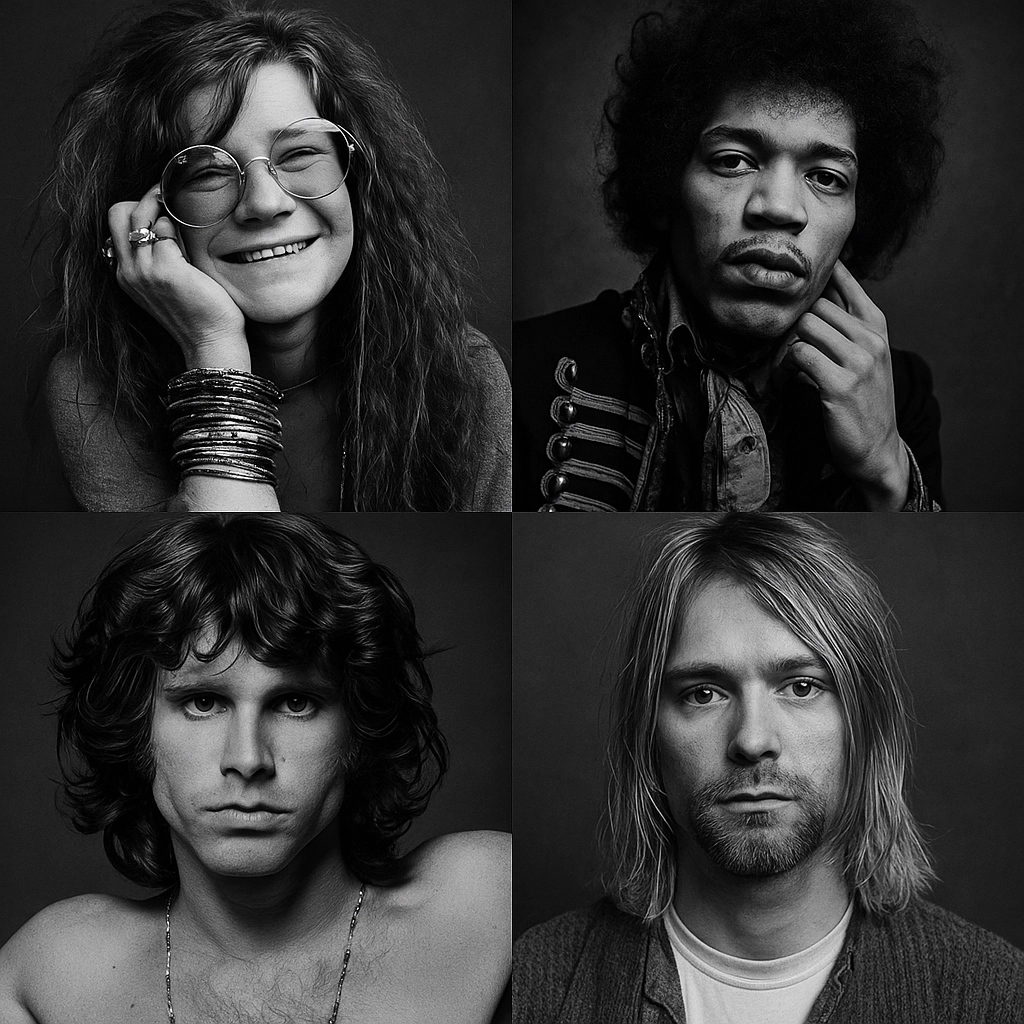
- Jimi Hendrix (1970) - Guitar innovator
- Janis Joplin (1970) - Rock and soul icon
- Arlester Dyke Christian (1971) - Dyke and the Blazers bandleader
- Jim Morrison (1971) - The Doors frontman
- Leslie Harvey (1972) - Stone the Crows guitarist
- Linda Jones (1972) - R and B singer
- Ron Pigpen McKernan (1973) - Grateful Dead founding member
- Roger Lee Durham (1973) - Bloodstone singer
- Pamela Courson (1974) - Counterculture figure
- Dave Alexander (1975) - The Stooges bassist
- Pete Ham (1975) - Badfinger singer songwriter
- Gary Thain (1975) - Uriah Heep bassist
- Cecilia (1976) - Spanish singer songwriter
- Chris Bell (1978) - Big Star guitarist
- Jacob Miller (1980) - Reggae singer
- D. Boon (1985) - Minutemen guitarist
- Jean-Michel Basquiat (1988) - Artist
- Pete de Freitas (1989) - Echo and the Bunnymen drummer
- Mia Zapata (1993) - The Gits singer
- Kurt Cobain (1994) - Nirvana frontman
- Kristen Pfaff (1994) - Hole bassist
- Richey Edwards (1995) - Manic Street Preachers lyricist, disappeared
- Fat Pat (1998) - Houston rapper
- Rodrigo Bueno (2000) - Argentine singer
- Jeremy Michael Ward (2003) - The Mars Volta sound manipulator
- Jonathan Brandis (2003) - Actor
- Valentin Elizalde (2006) - Mexican singer
- Amy Winehouse (2011) - Singer and songwriter
- Anton Yelchin (2016) - Actor
- Kim Jonghyun (2017) - SHINee singer
Patterns and Theories
Coincidence vs Clustering
Statistically, early celebrity deaths cluster in the 20s and 30s due to touring stress, substance risk, and mental health strain. Age 27 stands out culturally, but may not be unique statistically.
Lifestyle and Industry Pressures
Fame amplifies access to substances, sleep disruption, relentless schedules, and limited privacy. These factors can combine with preexisting vulnerabilities.
Mythmaking and Memory
Once a pattern is named, confirmation bias can lock it in. The mind naturally seeks order in chaos, and when tragedy strikes at the same age, it feels like part of a hidden design rather than coincidence. The legend persists because it is memorable, tragic, and narratively tidy - a story with built-in drama that fits neatly into popular culture's fascination with doomed genius.
Over time, each new member is absorbed into the myth as if fate itself drew them in. This transforms unrelated events into chapters of a single eerie tale, making the 27 Club less a list of deaths and more an unending story whispered in music history's darker corners.
Whether coincidence, curse, or something stranger still, the number lingers - a silent milestone that some cross without knowing they were headed there all along.
Case Snapshots
Jimi Hendrix (1970)
A transformative guitarist whose rapid rise and experimental lifestyle intersected with exhaustion and substance risk.
Janis Joplin (1970)
A powerful voice in rock and soul whose intense touring and personal struggles became part of the 27 Club story.
Jim Morrison (1971)
Poetic rock frontman of The Doors, known for his magnetic stage presence and surreal, often provocative lyrics, who ultimately succumbed to addiction.
Kurt Cobain (1994)
The pressures of sudden global fame, health issues, and mental health challenges placed him at the center of the myth.
Skeptic View
Researchers argue the 27 Club is a classic example of selection bias: we remember the famous cases at 27 and overlook similar tragedies at 25, 26, 28, or 29. In other words, the pattern may be more about the stories we tell than about any mysterious curse.
Statisticians point out that young adulthood in general is a high-risk period for those in high-pressure, high-profile careers. Factors such as substance abuse, mental health struggles, touring exhaustion, and sudden wealth can create a dangerous mix for artists in their twenties. When a death happens to occur at 27, it stands out more because the number itself has become symbolic.
Some psychologists suggest the "27 myth" may even reinforce itself. Fans and media highlight each new case, keeping the idea alive in public consciousness, while ignoring the many successful musicians who thrive well beyond that age. This creates a feedback loop where the 27 Club becomes a cultural legend rather than a statistical anomaly.
Cultural Impact
The 27 Club shapes how we tell stories about genius and self-destruction. It influences documentaries, biographies, tribute albums, and the way new artists talk about pressure, health, and longevity.
Takeaway
Whether coincidence or signal, the 27 Club keeps a spotlight on artist wellness. The strongest response to the legend is practical: better support for mental health, recovery, and rest in creative industries.