
Marie Antoinette: Queen, Revolution and Legacy
The Queen Who Lost Her Head
Skygaze explores the life, controversies, trial, and enduring legacy of one of history's most famous and misunderstood queens.
A Princess from Austria
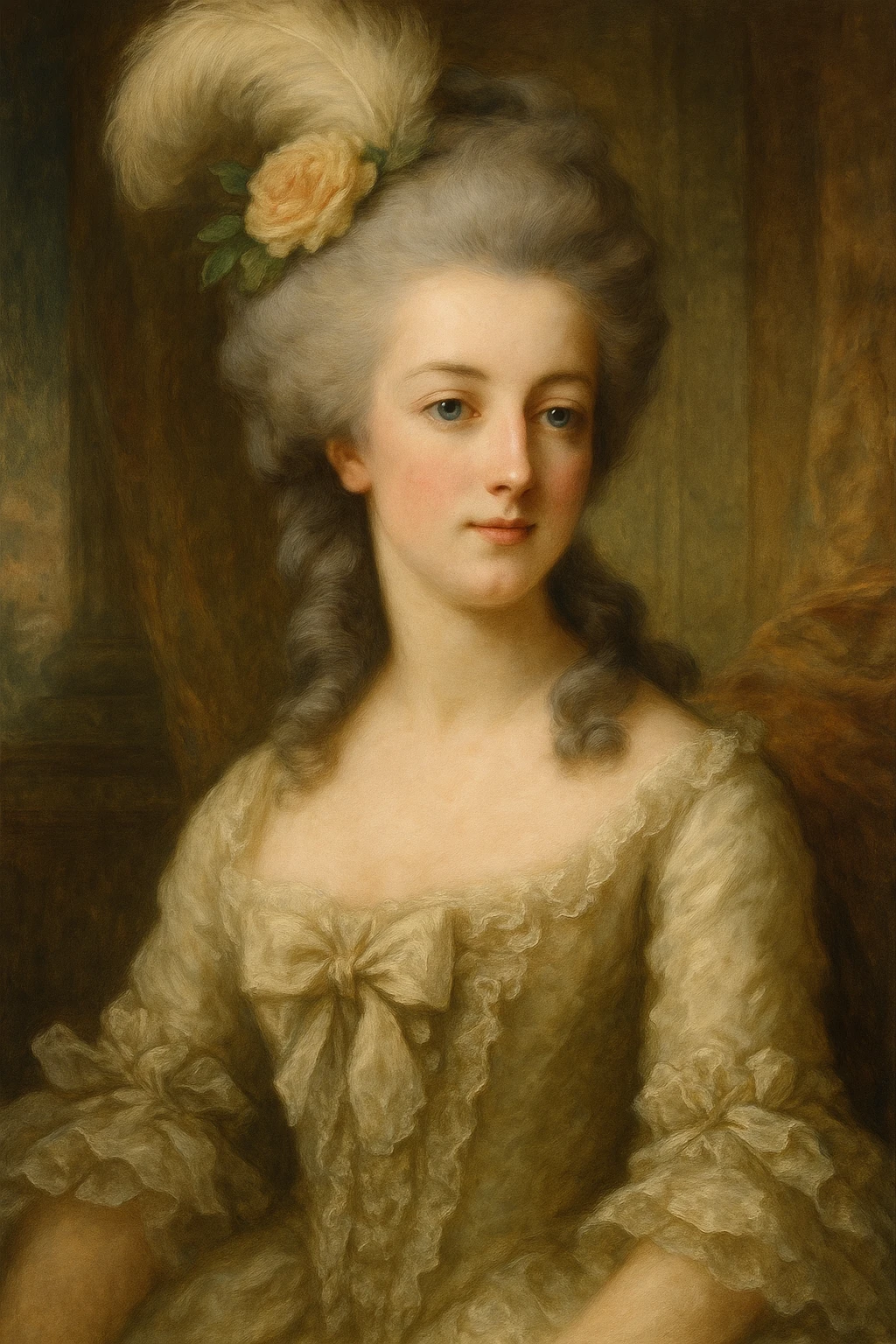
Marie Antoinette was born into the powerful Habsburg dynasty of Austria, the fifteenth child of Empress Maria Theresa. At just fourteen years of age, she was married to Louis-Auguste, the future King Louis XVI of France, in an alliance intended to strengthen ties between two of Europe's most influential royal houses.
Arriving at the magnificent Palace of Versailles as a young foreign princess, Marie Antoinette entered one of the most formal and politically charged courts in Europe. Every aspect of royal life-from etiquette and fashion to personal friendships-was closely observed, leaving little room for privacy or mistakes. As an outsider, she struggled to win the trust of many within the French court.
Although she would later become one of history's most recognizable queens, Marie Antoinette's early years in France were shaped by youth, isolation, and enormous expectations. Long before revolution swept across the country, the foundations of her tragic story had already begun to take shape.
"Let Them Eat Cake?"
Perhaps no quotation is more closely associated with Marie Antoinette than the phrase, "Let them eat cake." Yet despite its lasting fame, historians generally agree there is no reliable evidence that she ever spoke those words. Similar stories appeared years before she even became Queen of France, suggesting the quote was likely attached to her later as public resentment toward the monarchy intensified.
Even without the famous phrase, Marie Antoinette developed a reputation for extravagance. Her love of elegant fashion, elaborate hairstyles, private entertainments, and expensive renovations at Versailles contrasted sharply with the economic hardships faced by many ordinary French citizens. Whether entirely deserved or not, she gradually became a symbol of royal excess during a time of growing national crisis.
Modern historians often argue that Marie Antoinette's image was shaped as much by political propaganda and public perception as by her actual actions. The legend of the careless queen ultimately became more powerful than the historical evidence itself.
The Fall of the Monarchy
As the French Revolution gathered momentum, growing economic hardship, political unrest, and public anger placed the monarchy under increasing pressure. Attempts by the royal family to flee France during the Flight to Varennes further damaged public trust and strengthened the belief that the king and queen no longer supported the nation they ruled.
In 1792, the French monarchy was abolished, and both Louis XVI and Marie Antoinette were imprisoned. Following the king's execution, the former queen faced charges that included treason and conspiring against the French Republic. After a brief and highly publicized trial, she was found guilty and sentenced to death.
On October 16, 1793, at the age of thirty-seven, Marie Antoinette was executed by guillotine in Paris. Witnesses described her final moments as calm and composed, bringing an end to the life of the last Queen of France before the Revolution permanently transformed the nation.
A Legacy in Lace and Blood
Few royal figures have experienced such a dramatic transformation in public memory as Marie Antoinette. During the French Revolution she became a symbol of privilege, extravagance, and the excesses of the monarchy. In the centuries that followed, however, historians have revisited her life, offering a more nuanced portrait of a young queen caught in extraordinary political circumstances.
Today, Marie Antoinette remains a cultural icon whose image appears in films, literature, fashion, and popular art. While some continue to view her as the embodiment of aristocratic excess, others see a woman whose reputation was amplified by rumor, propaganda, and the turmoil of revolution.
Whether remembered as a tragic queen, a misunderstood historical figure, or a symbol of an age that was rapidly coming to an end, Marie Antoinette continues to fascinate generations of readers. Skygaze invites you to explore the history, separate legend from fact, and consider how easily public perception can reshape a life long after it has ended.