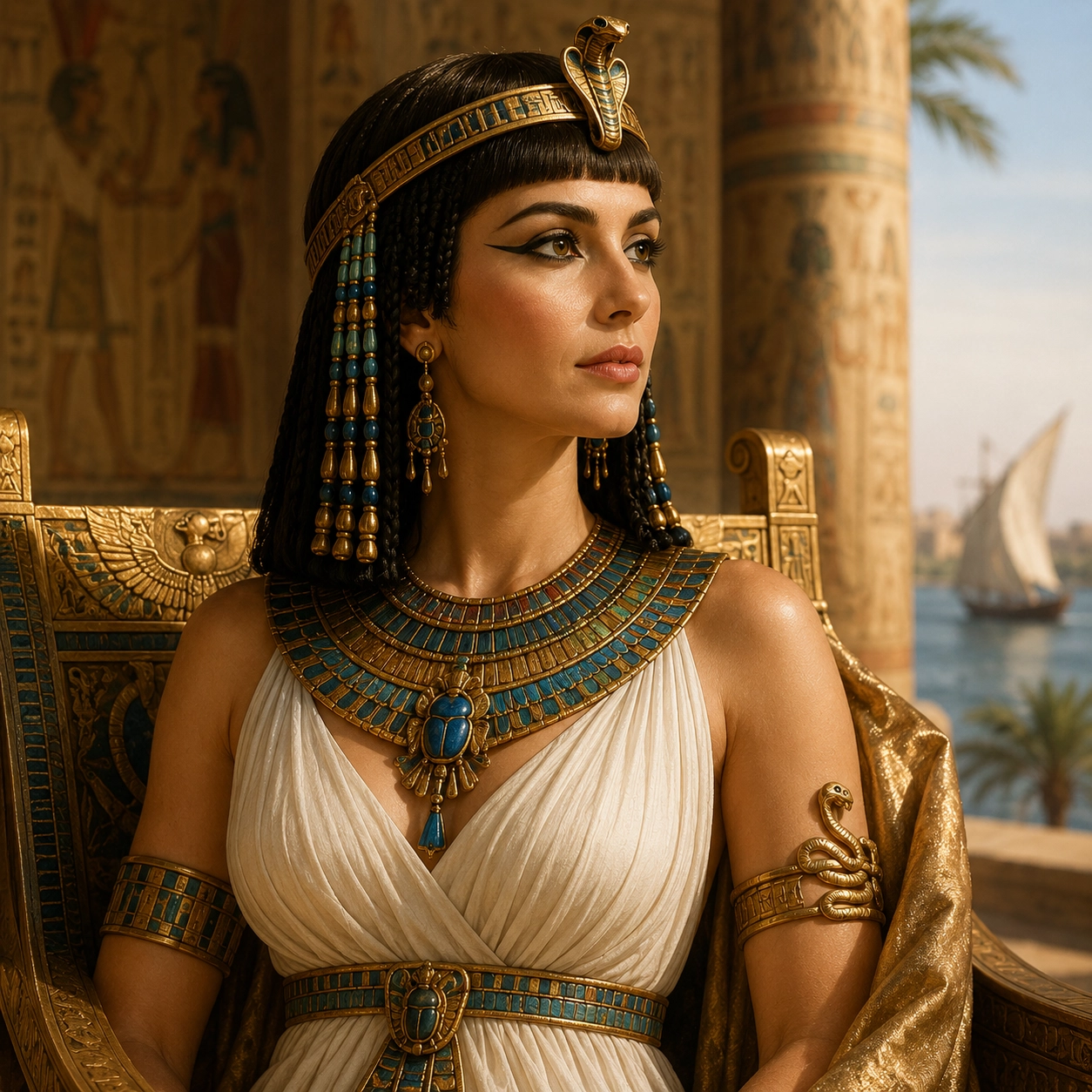

Cleopatra: Queen, Power and the Mystery of a Lost Tomb
The Queen Who Challenged the Power of Rome
Skygaze explores the remarkable reign, political alliances, military defeat, dramatic death, and enduring mysteries surrounding one of the most famous rulers of the ancient world.
Born into a Dynasty of Power and Intrigue
Cleopatra VII was born in 69 BC into the Ptolemaic dynasty, a royal family of Macedonian Greek origin that had ruled Egypt since the era of Alexander the Great. Although the dynasty governed from Alexandria, its rulers often preserved Greek language and customs while presenting themselves as Egyptian pharaohs.
Cleopatra received an extensive education and became known for her intelligence, political awareness, and command of several languages. Unlike many members of her dynasty, she embraced Egyptian religious traditions and is believed to have learned the Egyptian language, helping her communicate a stronger connection with the people she ruled.
She inherited the throne in 51 BC following the death of her father, Ptolemy XII. According to royal tradition, she ruled alongside her younger brother Ptolemy XIII, but rivalry quickly divided the court. Cleopatra was eventually forced from Alexandria and began gathering support to reclaim her position.
Cleopatra and Julius Caesar
Cleopatra's struggle for power became entangled with Roman politics when Julius Caesar arrived in Alexandria in 48 BC. According to a famous account, she secretly entered Caesar's quarters concealed inside a rolled carpet or bedding bundle, although the exact details may have been embellished by later storytellers.
Caesar supported Cleopatra during the conflict with Ptolemy XIII. After fighting in Alexandria, her brother was defeated and died while attempting to escape across the Nile. Cleopatra regained the throne and ruled with another younger brother, Ptolemy XIV, while becoming Caesar's political ally and romantic partner.
Cleopatra later gave birth to a son named Ptolemy XV Caesar, commonly known as Caesarion, whom she presented as Caesar's child. She visited Rome and remained there until Caesar was assassinated in 44 BC. Returning to Egypt, she increasingly ruled alongside Caesarion and worked to strengthen the kingdom's independence and prosperity.
An Alliance with Mark Antony
After Caesar's death, Rome entered another period of civil war. Cleopatra formed an alliance with Mark Antony, one of the most powerful Roman leaders of the era. Their relationship was both political and personal, combining Antony's military influence with Egypt's wealth, resources, and strategic position.
Cleopatra and Antony had three children together. Antony granted territories and royal titles to Cleopatra and her children during a ceremony known as the Donations of Alexandria. These actions alarmed his rival Octavian, Caesar's adopted heir, who portrayed Antony as a Roman leader surrendering his judgment and authority to a foreign queen.
Octavian's campaign against Cleopatra relied heavily on propaganda. Roman writers increasingly depicted her as a dangerous seductress who had bewitched Antony, minimizing her intelligence as a ruler and presenting the conflict as a struggle between disciplined Rome and a corrupt eastern monarchy.
Actium, Defeat, and a Mysterious Death
The conflict reached a decisive turning point at the Battle of Actium in 31 BC. The combined forces of Antony and Cleopatra were defeated by Octavian's fleet off the western coast of Greece. The couple withdrew to Egypt, but Octavian continued his advance and entered Alexandria the following year.
Antony died after receiving a false report that Cleopatra had already taken her own life. Ancient accounts state that he was brought to the building where Cleopatra had taken refuge and died in her presence. With Antony gone and Octavian determined to take control of Egypt, Cleopatra faced the prospect of being transported to Rome and displayed as a defeated captive.
Cleopatra died soon afterward at approximately thirty-nine years of age. The most famous version claims that she allowed a venomous snake, often described as an asp, to bite her. However, ancient sources offered conflicting explanations, and some historians believe she may instead have used a prepared poison. The exact method of her death remains uncertain.
The Search for Cleopatra's Lost Tomb
Ancient writers reported that Octavian allowed Cleopatra and Mark Antony to be buried together, but the location of their tomb has never been conclusively identified. Alexandria experienced earthquakes, rising sea levels, construction, and centuries of political change, leaving portions of its ancient royal district submerged beneath the Mediterranean Sea.
Some archaeologists believe the tomb may lie beneath modern Alexandria or within its underwater ruins. Others have investigated Taposiris Magna, a temple complex west of the city associated with the goddess Isis. Excavations there have uncovered coins, burials, tunnels, and objects dating to Cleopatra's era, but no definitive evidence that the queen was buried at the site.
Claims that Cleopatra's tomb has finally been located appear regularly in popular media, yet none has produced a burial, inscription, or artifact proving that her final resting place has been found. Until such evidence emerges, the tomb remains one of archaeology's most famous unsolved searches.
The Queen Behind the Legend
Cleopatra's death ended nearly three centuries of Ptolemaic rule. Egypt became a province under Octavian, who soon assumed the title Augustus and became Rome's first emperor. Caesarion was killed, removing a possible rival whose claimed descent from Julius Caesar could have threatened Octavian's position.
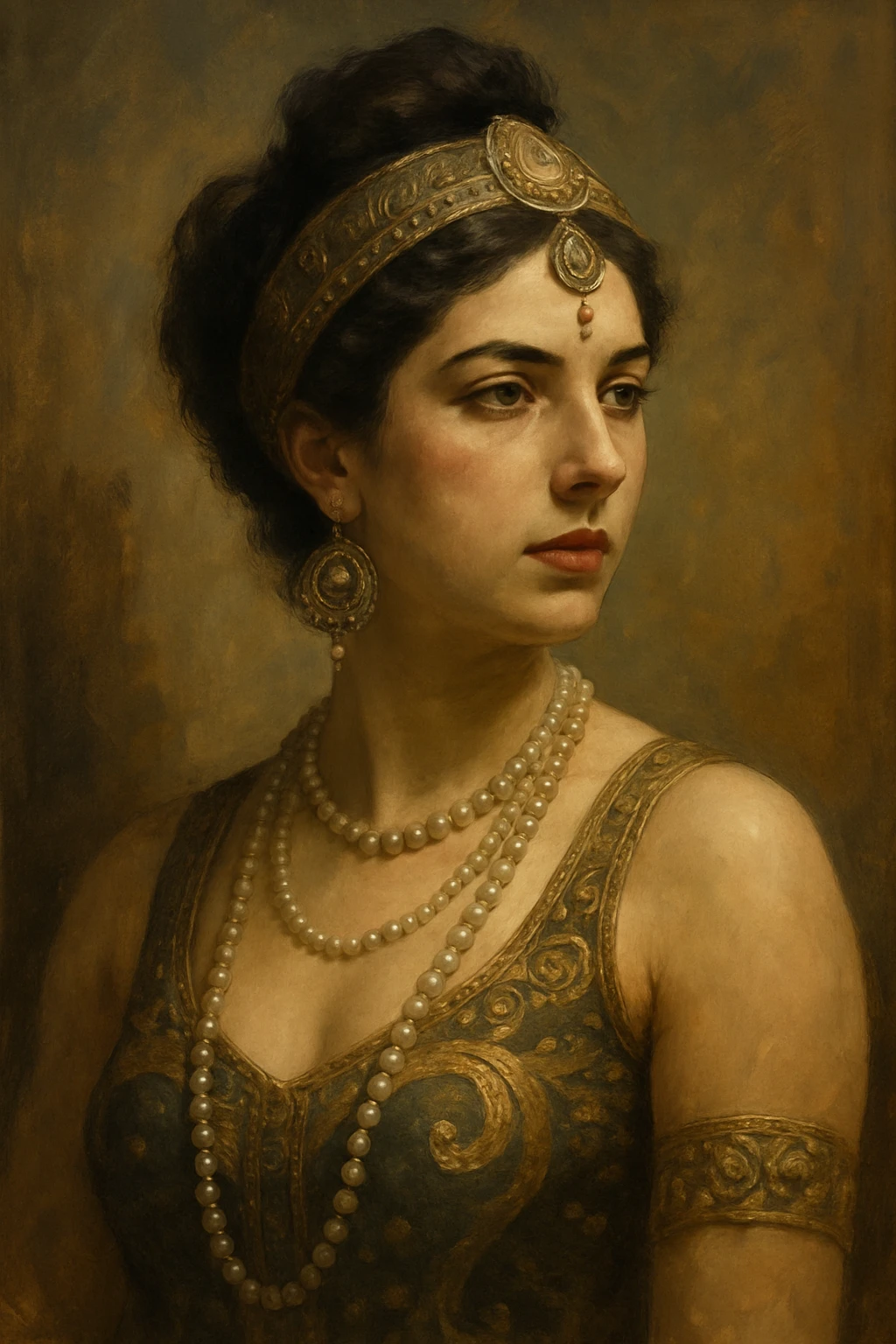
For centuries, Cleopatra was remembered primarily through accounts written by Roman authors who inherited the viewpoint of her enemies. Paintings, plays, novels, and films later emphasized her beauty and romantic relationships, frequently overshadowing her education, command of languages, economic policies, and determination to preserve Egypt's independence.
Cleopatra was neither merely a tragic lover nor the supernatural seductress imagined by Roman propaganda. She was a capable ruler navigating a dangerous political world dominated by an expanding empire. Skygaze invites readers to look beyond the familiar legend and discover the strategist, survivor, and queen whose life still fascinates the world and whose lost tomb may yet be waiting to be found.