
Mao Zedong: Revolution, Famine and Legacy
The Legacy of China's Chairman
Skygaze explores the life, rise to power, political campaigns, and enduring legacy of one of the most influential and controversial leaders of the twentieth century.
From Farmer's Son to Revolutionary Leader
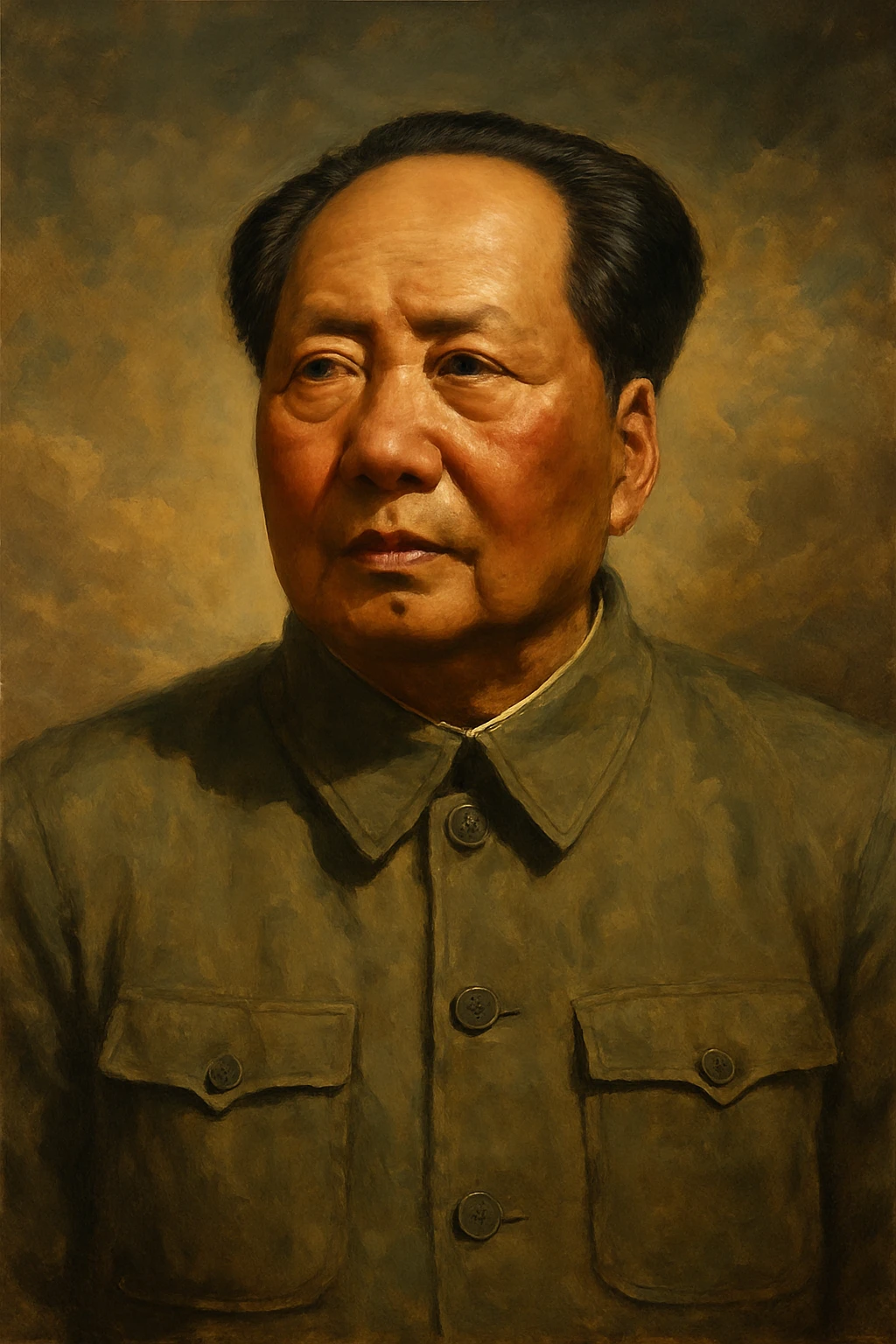
Mao Zedong was born in Hunan Province to a farming family at a time when China was experiencing political instability, foreign influence, and widespread social unrest. Drawn to revolutionary ideas during the early twentieth century, he embraced Marxism and became one of the founding members of the Chinese Communist Party in 1921.
Over the following decades, Mao emerged as one of the Communist movement's most influential leaders. After years of civil war, political struggle, and the historic Long March, Communist forces defeated the Nationalist government in 1949. Mao proclaimed the founding of the People's Republic of China, beginning a new era that would permanently reshape the nation's political, economic, and social landscape.
To many Chinese citizens, Mao remains the revolutionary leader who unified the country and ended decades of internal conflict and foreign domination. To others, the policies implemented during his rule resulted in immense human suffering and lasting political repression. Few figures in modern history have inspired such dramatically different interpretations.
The Great Leap Forward
In 1958, Mao Zedong launched the Great Leap Forward, an ambitious campaign intended to transform China from a largely agricultural society into a modern industrial power. The program encouraged the creation of vast rural communes, collective farming, and rapid industrial production, with the goal of accelerating economic development in only a few years.
In practice, many of the policies proved unrealistic and were often enforced through rigid political pressure. Local officials frequently exaggerated production figures, while grain quotas continued even as harvests declined. Combined with poor planning, unfavorable weather in some regions, and the suppression of criticism, these factors contributed to one of the worst famines in recorded history.
Historians estimate that tens of millions of people died between 1959 and 1961 from starvation and related causes, although the exact number remains debated. Estimates commonly range from approximately 15 to 45 million deaths, making the Great Leap Forward one of the deadliest human-made disasters of the twentieth century. The catastrophe profoundly affected China's economy, rural society, and Mao's political standing, while continuing to shape historical debate today.
The Cultural Revolution
In 1966, Mao launched the Cultural Revolution, a political campaign intended to preserve communist ideology and remove what he viewed as capitalist, traditional, and counter-revolutionary influences from Chinese society. He encouraged millions of young people, known as the Red Guards, to challenge authority and expose those accused of opposing the revolution.
The movement quickly spread across the country, bringing widespread political persecution, public humiliations, violence, and social upheaval. Teachers, intellectuals, government officials, and ordinary citizens were denounced, imprisoned, or sent to labor and re-education programs. Countless books, temples, works of art, and historical artifacts were destroyed as symbols of China's cultural past.
Although the Cultural Revolution officially ended after Mao's death in 1976, its effects were felt for decades. Families were divided, educational systems were disrupted, and millions of lives were permanently altered. Today, historians generally regard the Cultural Revolution as one of the most turbulent and damaging periods in modern Chinese history, though its legacy continues to be interpreted differently within and outside China.
A Legacy Still Debated
Few leaders in modern history have left a legacy as complex as Mao Zedong's. To many within China, he is remembered as the revolutionary who helped unify the country, ended decades of civil conflict, and laid the foundations for modern China. His portrait still overlooks Tiananmen Square, and his image remains on every Chinese banknote, reflecting his enduring place in the nation's history.
Outside China, however, Mao is often remembered for the immense human cost associated with policies such as the Great Leap Forward and the Cultural Revolution. Historians continue to debate the full extent of his responsibility, but there is broad agreement that these campaigns resulted in widespread famine, political persecution, and profound social upheaval affecting tens of millions of people.
More than four decades after his death, Mao Zedong remains a figure who inspires both admiration and condemnation. His life illustrates how a single leader can transform a nation while leaving behind a legacy that continues to divide historians, political leaders, and ordinary people around the world. Skygaze invites readers to examine the evidence, explore the history, and decide for themselves how one of the twentieth century's most influential figures should be remembered.